MS-CIT | BASIC COMPUTER & OFFICE MANAGEMENT | TALLY PRIME & GST | ADVANCE EXCEL | GRAPHIC DESIGN | SOFTWARE TRAINING | HARDWARE TRAINING | 2D & 3D ANIMATION | AUTOCAD & 3DS MAX

TIIT Computer Education

Diploma in Cybersecurity & Ethical Hacking.

PREREQUSITES: (Networking + Linux + Hardware + Programming Language(Python , C++ ,Bash , Javascript , SQL )

Time Duration: 120 hours

Networking

Module 1: Introduction to Networking
  • What is a network?
  • Types of networks: LAN, WAN, MAN, PAN
  • Network topologies: Star, Ring, Bus, Mesh, Hybrid
  • Network components: Router, Switch, Hub, Modem, Access Point
  • OSI Model Overview (7 Layers)
Module 2: Network Protocols and Models
  • OSI vs TCP/IP models
  • Protocols and their functions:
    • IP (Internet Protocol)
    • TCP (Transmission Control Protocol)
    • UDP (User Datagram Protocol)
    • HTTP/HTTPS, FTP, SMTP, DNS
  • IP Addressing (IPv4 & IPv6)
  • Subnetting and CIDR notation
Module 3: IP Addressing and Subnetting
  • Private vs Public IP addresses
  • Network masks and subnetting
  • Calculating network, broadcast, and host addresses
  • Introduction to NAT (Network Address Translation)
  • Hands-on subnetting exercises
Module 4: Switching and Routing Basics
  • Difference between switch, router, and hub
  • MAC addresses and ARP
  • Routing basics: Static vs Dynamic routing
  • Common routing protocols: RIP, OSPF, EIGRP
  • VLANs and inter-VLAN routing
Module 5: Network Devices and Cabling
  • Types of network devices: Switches, Routers, Firewalls, Access Points
  • Cables and connectors: Twisted Pair (Cat5/6), Fiber Optics, Coaxial
  • Wireless networking basics (Wi-Fi standards, channels, SSID)
Module 6: Wireless Networking
  • Wi-Fi standards (802.11 a/b/g/n/ac/ax)
  • Wireless security: WEP, WPA, WPA2, WPA3
  • SSID, channel, and frequency basics
  • Wireless troubleshooting and site surveys
Module 7: Network Security Fundamentals
  • Introduction to network security
  • Firewalls, VPNs, IDS/IPS
  • Security best practices: Password policies, ACLs
  • Basic encryption concepts (SSL/TLS, HTTPS)
Module 8: TCP/IP and Ports
  • Understanding TCP/IP stack
  • Common ports and their services:
    • HTTP → 80, HTTPS → 443
    • SSH → 22, FTP → 21, DNS → 53
  • Packet structure basics
  • Packet capture and analysis using Wireshark
Module 9: Network Troubleshooting
  • Troubleshooting methodology
  • Common commands: ping, tracert/traceroute, ipconfig/ifconfig, nslookup, netstat
  • Identifying and solving connectivity issues
  • Using logs and monitoring tools
Networking Course

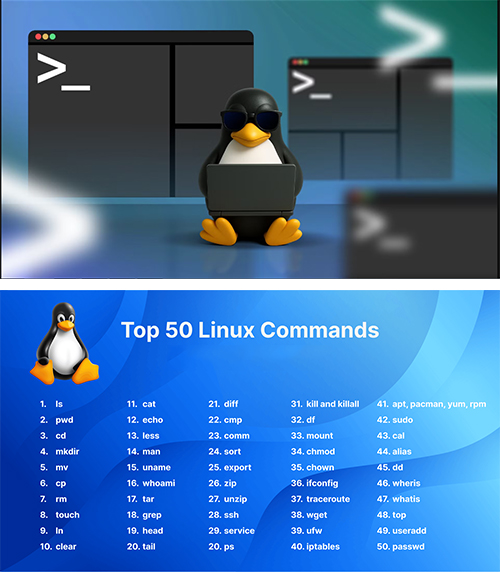
Linux

Module 1: Introduction to Linux
  • What is Linux and its history
  • Linux distributions (Ubuntu, CentOS, Fedora, Debian)
  • Open source philosophy and community
  • Linux vs Windows comparison
  • Linux architecture overview (Kernel, Shell, File System)
Module 2: Linux Installation & Environment
  • Installing Linux (Desktop & Server versions)
  • Using Live CD/USB
  • Logging in and understanding the shell
  • Desktop vs Terminal interface
  • Introduction to the Linux terminal
Module 3: Linux File System
  • Directory structure and hierarchy (/, /home, /etc, /var)
  • Absolute vs relative paths
  • Basic file commands: ls, cd, pwd, tree
  • Creating, copying, moving, and deleting files & directories: cp, mv, rm, mkdir, rmdir
  • File permissions and ownership (chmod, chown, chgrp)
Module 4: Basic Linux Commands
  • Viewing file content: cat, less, more, head, tail
  • Searching: grep, find, locate
  • File operations: touch, nano, vi/vim
  • Disk usage: df, du
  • System info: uname, hostname, uptime
Module 5: Users and Groups
  • Creating and managing users: useradd, usermod, passwd
  • Managing groups: groupadd, gpasswd
  • Switching users: su, sudo
  • Permissions and ownership concepts
  • Understanding special permissions: SUID, SGID, Sticky Bit
Module 6: Package Management
  • Package managers: apt (Debian/Ubuntu), yum/dnf (CentOS/Fedora)
  • Installing, updating, and removing packages
  • Searching for packages
  • Checking installed packages and versions
Module 7: Processes and Jobs
  • Understanding processes and PID
  • Viewing processes: ps, top, htop
  • Managing processes: kill, pkill, nice, renice
  • Background and foreground jobs: &, jobs, fg, bg
  • Scheduling tasks: cron and at
Module 8: Networking Basics
  • Checking network interfaces: ifconfig/ip a
  • Network connectivity: ping, traceroute, netstat
  • SSH basics: connecting to remote servers
  • File transfers: scp, rsync
  • Basic firewall: ufw, iptables
Module 9: File Compression & Archiving
  • Archiving files: tar
  • Compression utilities: gzip, bzip2, zip, unzip
  • Extracting files and directories
Module 10: Logs and System Monitoring
  • Viewing logs: /var/log/syslog, /var/log/messages, dmesg
  • Monitoring system resources: free, df, uptime, vmstat
  • Disk usage and quotas
Module 11: Shell Scripting Basics
  • Introduction to Bash scripting
  • Variables and user input
  • Conditional statements (if, else, elif)
  • Loops (for, while, until)
  • Writing simple automation scripts
Module 12: Basic Security
  • File permissions and user access control
  • Using sudo for administrative tasks
  • SSH key authentication
  • Basics of Linux firewall and iptables/ufw
  • Updating the system for security patches
Linux Course

Computer Hardware

Module 1: Introduction to Computer Hardware

  • Definition of computer hardware
  • Difference between hardware and software
  • Overview of computer components: Input, Output, Storage, Processing, and Memory
  • Types of computers: Desktop, Laptop, Server, Embedded systems

Module 2: Central Processing Unit (CPU)

  • Function of the CPU
  • CPU components: ALU (Arithmetic Logic Unit), CU (Control Unit), Registers
  • CPU types: Single-core, Multi-core, and Multi-threading
  • Clock speed and performance factors
  • Motherboard-CPU interaction

Module 3: Memory and Storage

  • Primary Memory (RAM, ROM)
  • Secondary Storage (HDD, SSD)
  • Cache Memory
  • Virtual Memory and Paging
  • Memory performance factors

Module 4: Motherboard

  • Function and importance
  • Components on motherboard: Chipset, BIOS/UEFI, Slots, Ports
  • Form factors: ATX, Micro-ATX, Mini-ITX
  • Expansion slots and connectors (PCI, PCIe)

Module 5: Input Devices

  • Keyboard, Mouse, Joystick, Scanner
  • Types and interfaces (USB, PS/2, Wireless)
  • Input device functionality and troubleshooting

Module 6: Output Devices

  • Monitor types: LCD, LED, OLED
  • Printers: Inkjet, Laser, Dot Matrix
  • Speakers, Projectors
  • Display resolutions, refresh rates, and color depth

Module 7: Storage Devices

  • Hard Disk Drive (HDD) and Solid State Drive (SSD)
  • Optical Storage: CD, DVD, Blu-Ray
  • Flash Drives, Memory Cards
  • Storage interfaces: SATA, NVMe, M.2

Module 8: Power Supply Unit (PSU)

  • PSU function and types
  • Power ratings and efficiency
  • Connectors and cables for components
  • Safety precautions and troubleshooting

Module 9: Peripheral Devices

  • External devices: USB devices, printers, scanners, external storage
  • Ports and interfaces (USB, HDMI, DisplayPort, Ethernet)
  • Connectivity and device installation

Module 10: Networking Hardware

  • Routers, Switches, Hubs, Modems
  • Network Interface Cards (NICs)
  • Cabling: Twisted Pair, Fiber Optics, Coaxial
  • Basic troubleshooting of network devices

Module 11: Hardware Troubleshooting

  • Identifying hardware problems
  • POST (Power-On Self-Test) and beep codes
  • Diagnostic tools: Multimeter, POST cards, hardware monitors
  • Replacing faulty components

Module 12: Assembling and Maintenance

  • Step-by-step PC assembly
  • Installing CPU, RAM, storage, GPU, PSU
  • Cable management
  • Cleaning and preventive maintenance
  • Understand the interfaces and connectivity options for peripherals and storage
Computer Hardware Course

Cybersecurity

Module 1: Introduction to Cybersecurity

  • What is cybersecurity? Importance in modern organizations
  • Types of cyber threats: Malware, Phishing, Ransomware, Insider threats
  • Cybersecurity goals: Confidentiality, Integrity, Availability (CIA triad)
  • Cybersecurity roles and career paths

Module 2: Networking Basics for Cybersecurity

  • Network fundamentals: LAN, WAN, Internet
  • IP addressing, Subnets, and Routing basics
  • Network devices: Router, Switch, Firewall, IDS/IPS
  • TCP/IP protocol suite and common ports

Module 3: Operating Systems Fundamentals

  • Basics of Windows, Linux, and MacOS
  • File systems, user accounts, and permissions
  • Command-line interface basics for Windows and Linux
  • System administration essentials

Module 4: Threats and Vulnerabilities

  • Malware types: Virus, Worm, Trojan, Spyware, Adware
  • Social engineering attacks: Phishing, Spear Phishing, Vishing
  • Vulnerabilities in software, hardware, and networks
  • Exploits and attack vectors

Module 5: Cybersecurity Tools

  • Antivirus and anti-malware software
  • Firewalls and intrusion detection/prevention systems (IDS/IPS)
  • Network monitoring tools: Wireshark, Nmap
  • Vulnerability scanners: Nessus, OpenVAS

Module 6: Cryptography Basics

  • Symmetric vs Asymmetric encryption
  • Hashing algorithms (SHA, MD5)
  • Digital signatures and certificates
  • Public Key Infrastructure (PKI) basics

Module 7: Identity and Access Management (IAM)

  • Authentication vs Authorization
  • User accounts and password policies
  • Multi-factor authentication (MFA)
  • Role-based access control (RBAC)

Module 8: Security Policies and Compliance

  • Importance of security policies in organizations
  • Data protection laws: GDPR, HIPAA, PCI-DSS
  • Risk assessment and management
  • Business continuity and disaster recovery planning

Module 9: Ethical Hacking & Penetration Testing (Intro)

  • Overview of ethical hacking
  • Penetration testing methodology: Reconnaissance → Scanning → Exploitation → Reporting
  • Common tools: Metasploit, Burp Suite
  • Basics of vulnerability assessment

Module 10: Security Monitoring and Incident Response

  • Logs and monitoring: SIEM (Security Information and Event Management)
  • Incident response lifecycle
  • Detecting and mitigating attacks
  • Reporting security incidents

Module 11: Cloud Security Fundamentals

  • Cloud security challenges: Shared responsibility model
  • Securing cloud resources (AWS, Azure, GCP)
  • Identity and access management in cloud
  • Basic cloud security best practices

Module 12: Cybersecurity Career Path Certifications

  • overview:
  • Beginner: CompTIA Security+, CEH (Certified Ethical Hacker), CyberSafe
  • Intermediate: CompTIA PenTest+, OSCP, CISSP
  • Job roles: Security analyst, SOC analyst, penetration tester, cloud security engineer
  • Tips for building hands-on skills
Cybersecurity

Python

Module 1: Introduction to Python

  • What is Python & its applications
  • Installing Python & IDE (VS Code, PyCharm, Jupyter)
  • Writing first program (print("Hello, World!"))
  • Python syntax, comments, indentation
  • Mini Task: Print your name, age, and city.

Module 2: Variables & Data Types

  • Numbers (int, float, complex)
  • Strings, Boolean
  • Lists, Tuples, Sets, Dictionaries
  • Type casting (int(), str(), float())
  • User input (input())
  • Mini Task: Take input for two numbers and print their sum.

Module 3: Operators

  • Arithmetic operators (+, -, *, /, %, //, **)
  • Relational operators (>, <, ==, !=)
  • Logical operators (and, or, not)
  • Assignment operators (=, +=, -=)
  • Membership (in, not in) & Identity (is, is not)
  • Mini Task: Check if a number is even and divisible by 5.

Module 4: Control Flow

  • if, if-else, if-elif-else
  • for and while loops
  • break, continue, pass
  • Mini Task: Print multiplication table of a given number.

Module 5: Strings & Data Structures

  • String indexing, slicing, methods (upper(), replace())
  • List operations (append, remove, sort)
  • Tuples (immutable lists)
  • Sets (unique values, union, intersection)
  • Dictionaries (key-value pairs, .get(), .items())
  • Mini Task: Count the frequency of each word in a string.

Module 6: Functions

  • Defining & calling functions
  • Arguments (positional, default, *args, **kwargs)
  • Return values
  • Lambda functions
  • Mini Task: Write a function that returns the factorial of a number.

Module 7: File Handling

  • Opening, reading, writing, appending files
  • File modes (r, w, a, rb, wb)
  • Reading lines from a file
  • Mini Task: Save student names into a file and then read them.

Module 8: Exception Handling

  • Types of errors
  • try-except block
  • finally and raise
  • Mini Task: Create a calculator that handles “division by zero”.

Module 9: Object-Oriented Programming

  • Classes & Objects
  • Constructor (__init__)
  • Instance & class variables
  • Methods
  • Inheritance (basic intro)
Python Programming